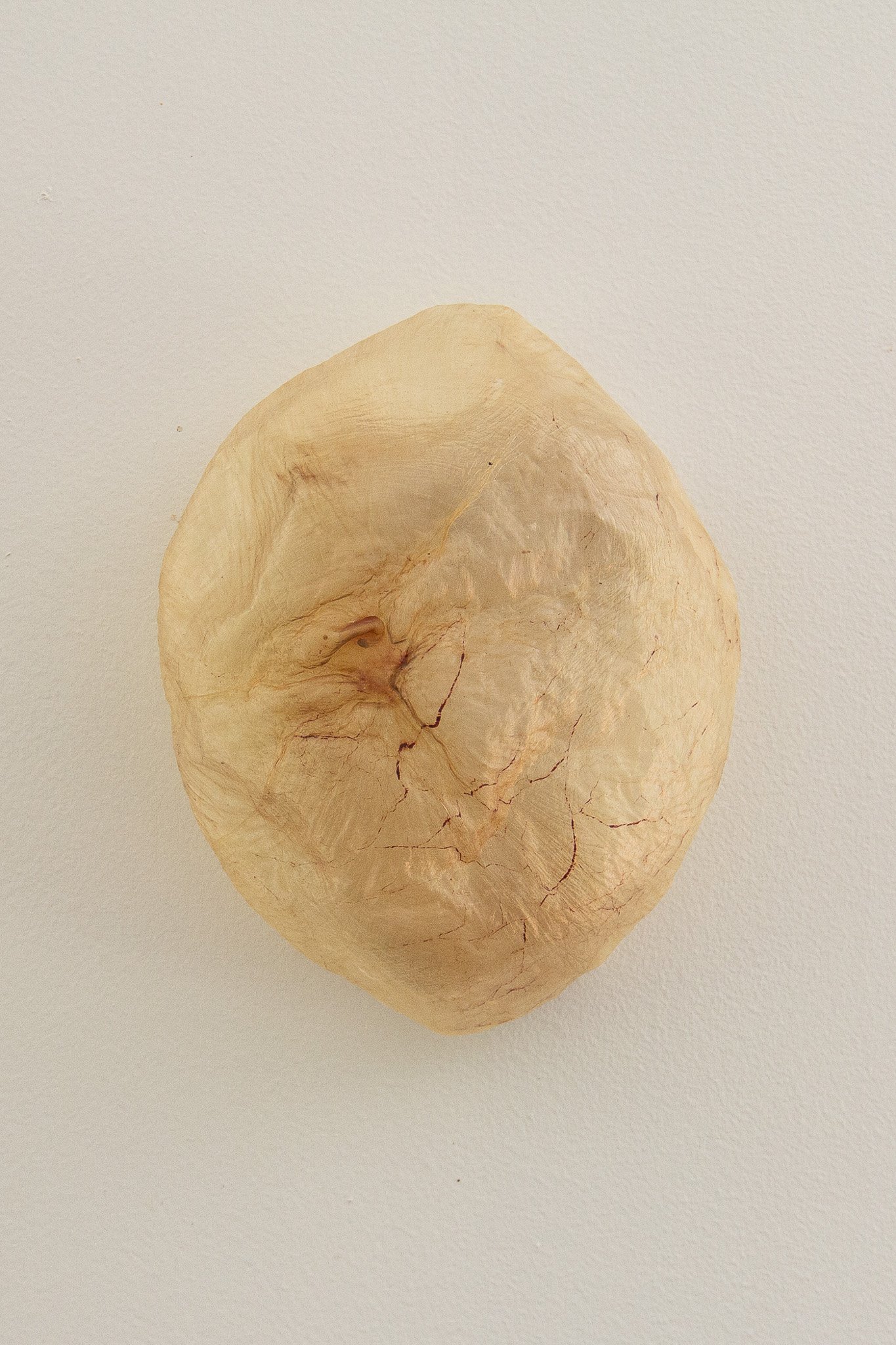
Vesica (after the body, light remains)
cow bladder
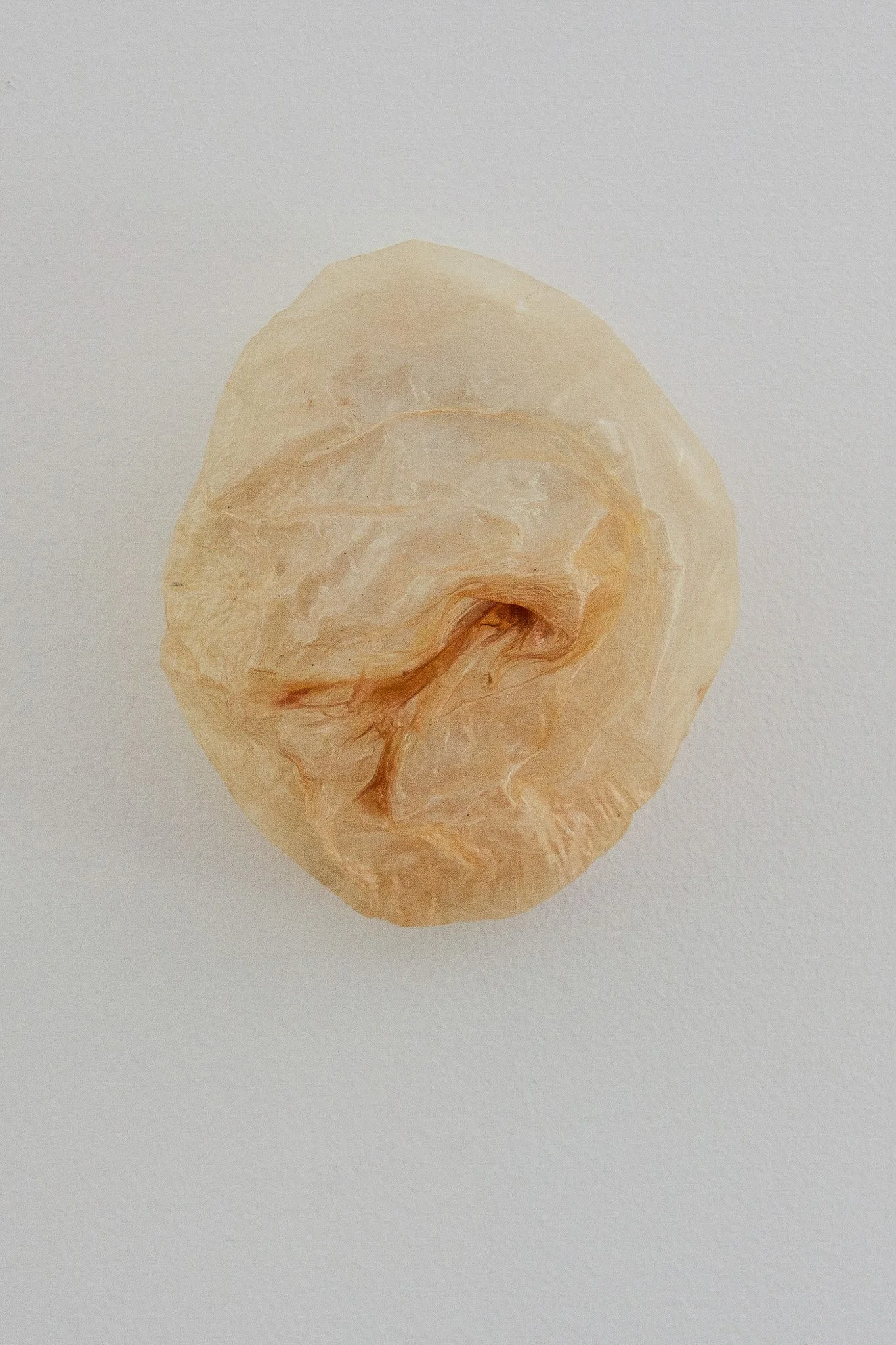
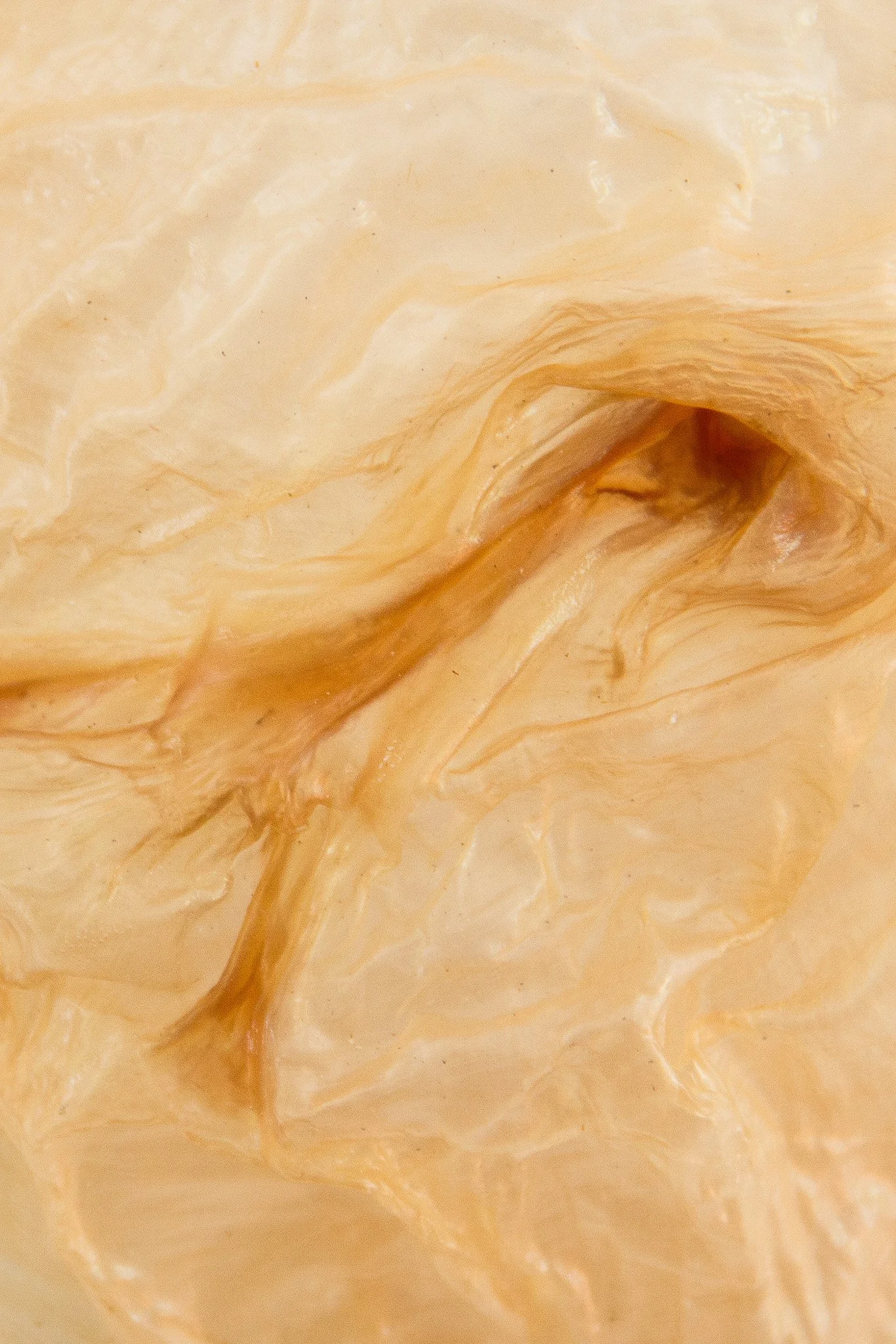
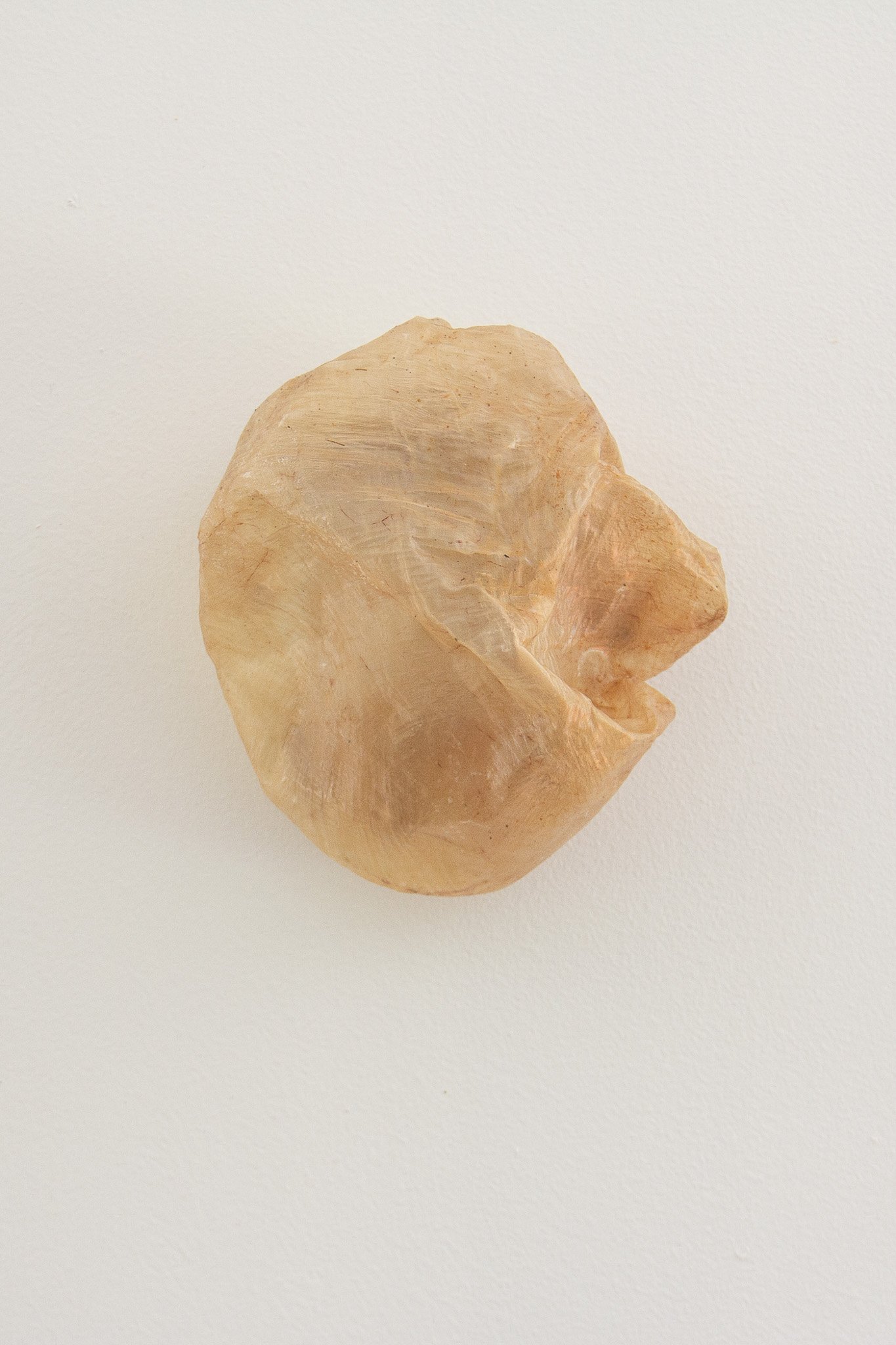
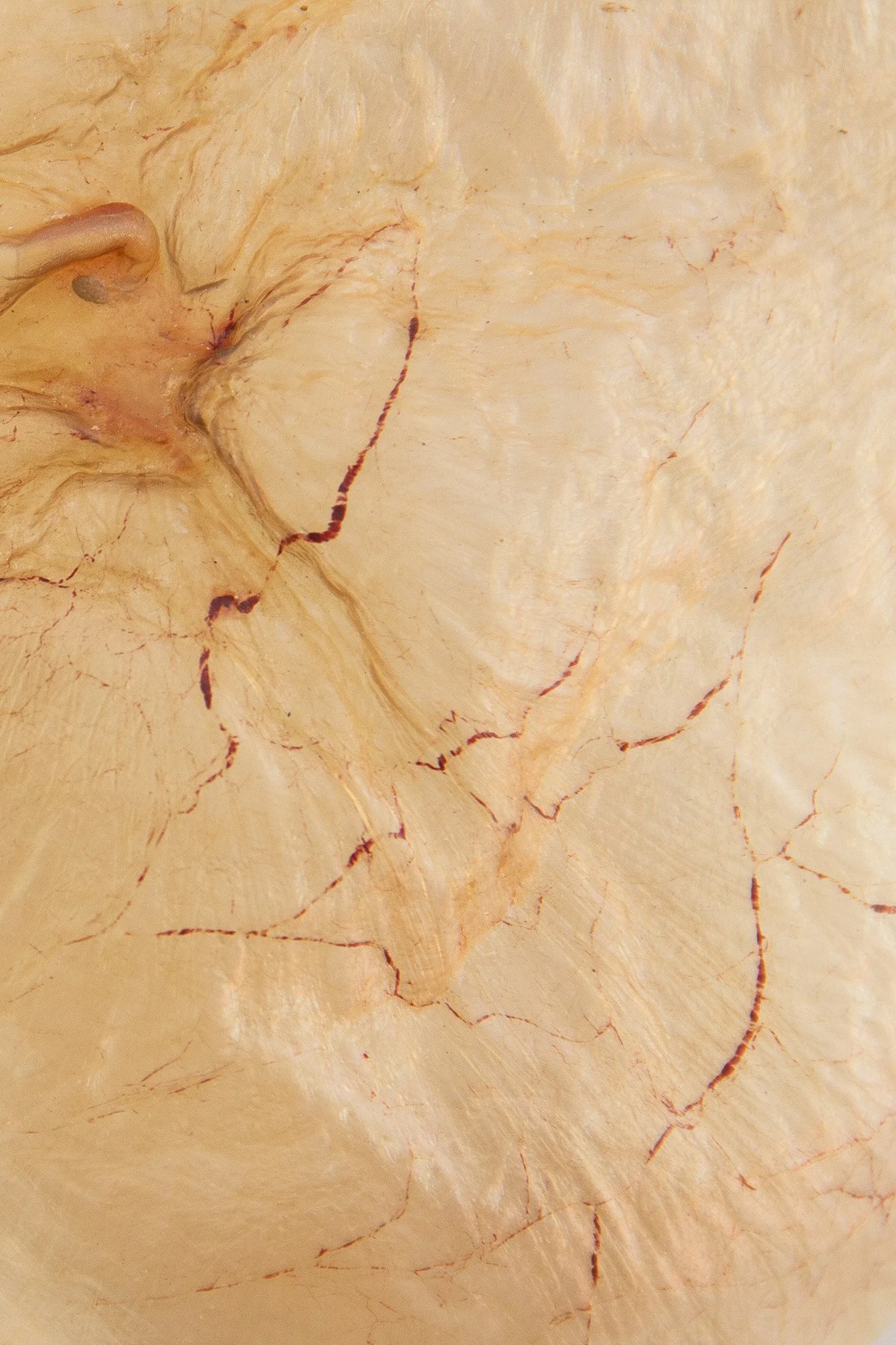
Vesica (after the body, light remains) is a wall-based sculpture formed from a cow’s bladder, an overlooked byproduct transformed through an intensive process of cutting, cleaning, inflating, drying, and reshaping. Initially wet, slippery, and encased within surrounding tissue, the organ is opened and stripped back to reveal its inherent structure. Through repeated handling, rewetting, and reforming, the material shifts from opaque and weighted to a thin, translucent membrane that holds and reflects light.
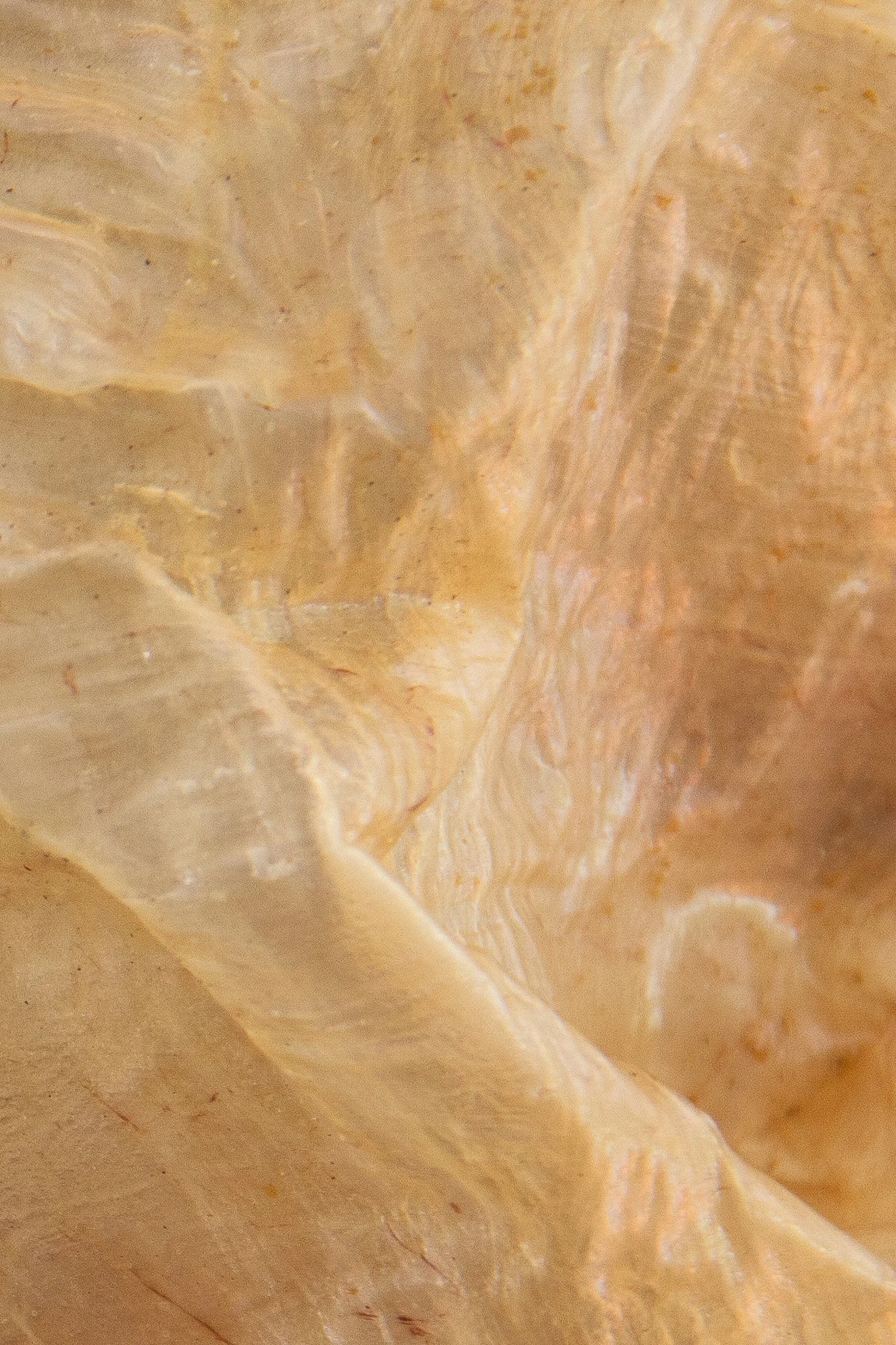
The making of the sculpture is a negotiation with the material — working with its fragility, resistance, and unpredictable qualities until a new form emerges. Its surface carries fine fibres and subtle tonal variations, registering both its origin and the labour involved in its transformation.
The process became a reflection on transformation beyond the material itself: the act of confronting what is hidden, difficult, or uncomfortable, and remaining with it long enough for another self to emerge. What begins as something overlooked is not discarded or concealed, but handled with care, reshaped, and revalued. The material is not erased, but carried forward, reconfigured into something held, permeable, and quietly radiant.